Professional Skin Colour Matching: Principles, Protocol and Practice
An educational overview of tone, undertone, viewing conditions and practitioner judgement; detailed internal protocols remain restricted.
READ THE GUIDEExplore Microskin’s 35 proprietary shades, Microskin-specific ColourMatch software, spectrophotometry and practitioner expertise in standard and custom colour matching.

A proprietary colour base developed specifically for Microskin Camouflage.
Screen appearance is not a substitute for professional colour assessment.
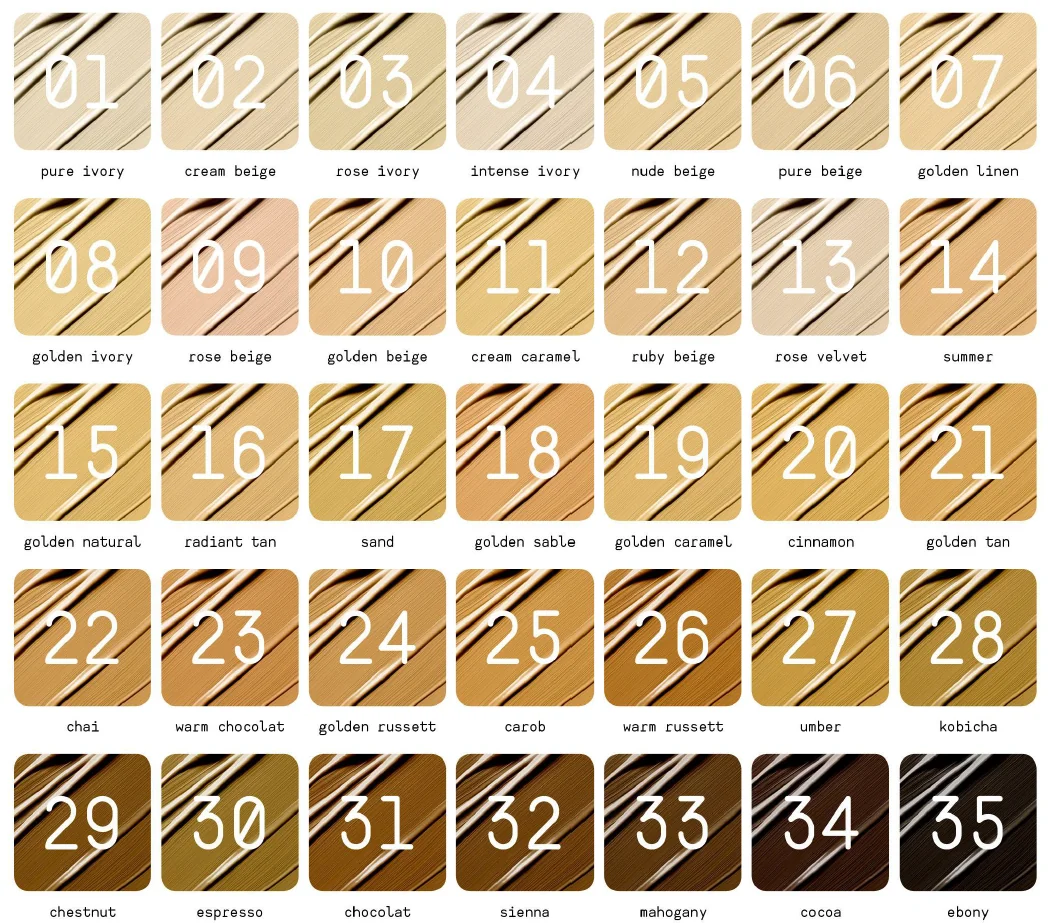
Microskin’s 35 proprietary standard shades form a colour base exclusive to Microskin Camouflage. The shade values are the reference against which the Microskin-specific matching software interprets a client’s measurement.
This is more than choosing a colour from a photograph or a shade name: measurement, a dedicated colour database and professional visual assessment work together.
Designed specifically to translate skin-colour measurements into the Microskin Camouflage colour system.
A spectrophotometer measures how skin reflects light to capture an objective skin-colour reading. It provides a measurement—not, by itself, a Microskin shade recommendation.
Microskin’s proprietary ColourMatch software interprets that reading specifically against the exclusive 35-shade colour base. It identifies the nearest standard Microskin shade or supports an exact customised match where needed.
Objective measurement → Microskin-specific interpretation → professional validation
Spectrophotometers are a general hardware category. The proprietary element is Microskin’s software, shade database and matching system.
When a standard shade is insufficient, the system supports a customised colour solution. The practitioner evaluates the recommendation and can support an exact custom match rather than forcing the client into the nearest established shade.
“Exact/custom” describes the colour-matching capability, not a guarantee of identical appearance in every condition. Visual validation and individual suitability remain essential.
Technology identifies the colour. Practitioner expertise validates the match.
Assess the recommended colour in context, not as an isolated swatch.
Consider the specific area and the skin around it; colour can vary across the body.
Colours that appear similar under one light can look different under another. Review in appropriate real-world viewing conditions.
Evaluate the appearance together before proceeding; a measurement does not replace informed professional judgement.
Spectrophotometer captures an objective skin-colour measurement.
Proprietary Microskin software compares the reading to the exclusive 35-shade Microskin colour base.
The Certified Microskin Practitioner evaluates the recommended match against surrounding skin, undertone and real-world appearance.
Where required, the practitioner can support an exact customised colour solution rather than forcing the client into the closest standard shade.
Explore professional colour theory, application and assessed practice through certification, or discuss how Microskin could fit your client journey.
An educational overview of tone, undertone, viewing conditions and practitioner judgement; detailed internal protocols remain restricted.
READ THE GUIDE2019 · 11 participants
A skin pigmentation regression test measured colour on the skin with a spectrophotometer before application and at days 1, 2, 4 and 7 after a single application.
READ STUDY SUMMARY2019 · Multiple research sources
‘Innovations in skin camouflaging techniques: Where are we scientifically?’ reviews developments and evidence across different skin-camouflage methods.
READ STUDY SUMMARY